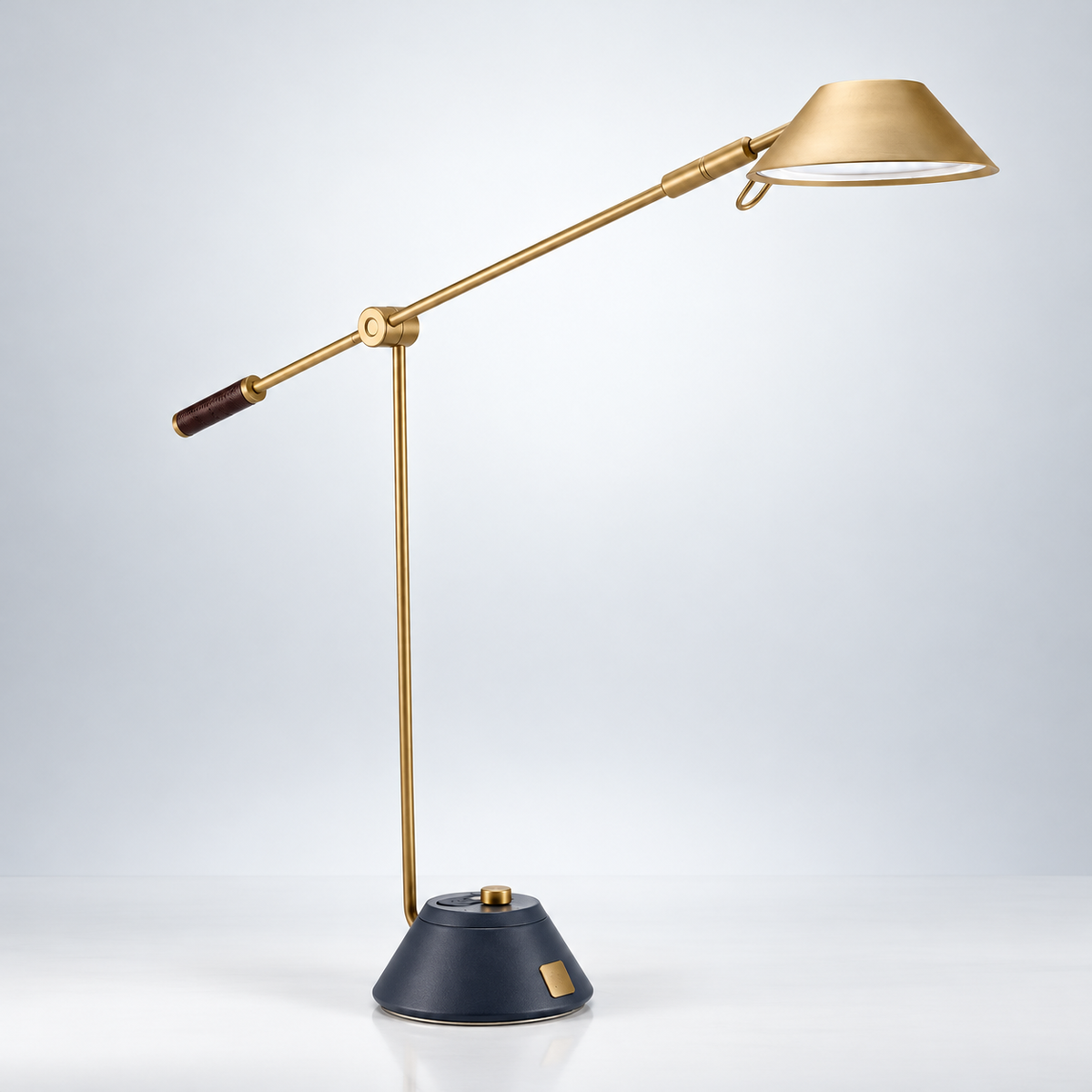
For a fixed desk
SOLA Desk
A movable light sensor reads at your task position. Select your task and position the arm by hand.
Screen work · Reading · Fine detail
Explore SOLA Desk ↗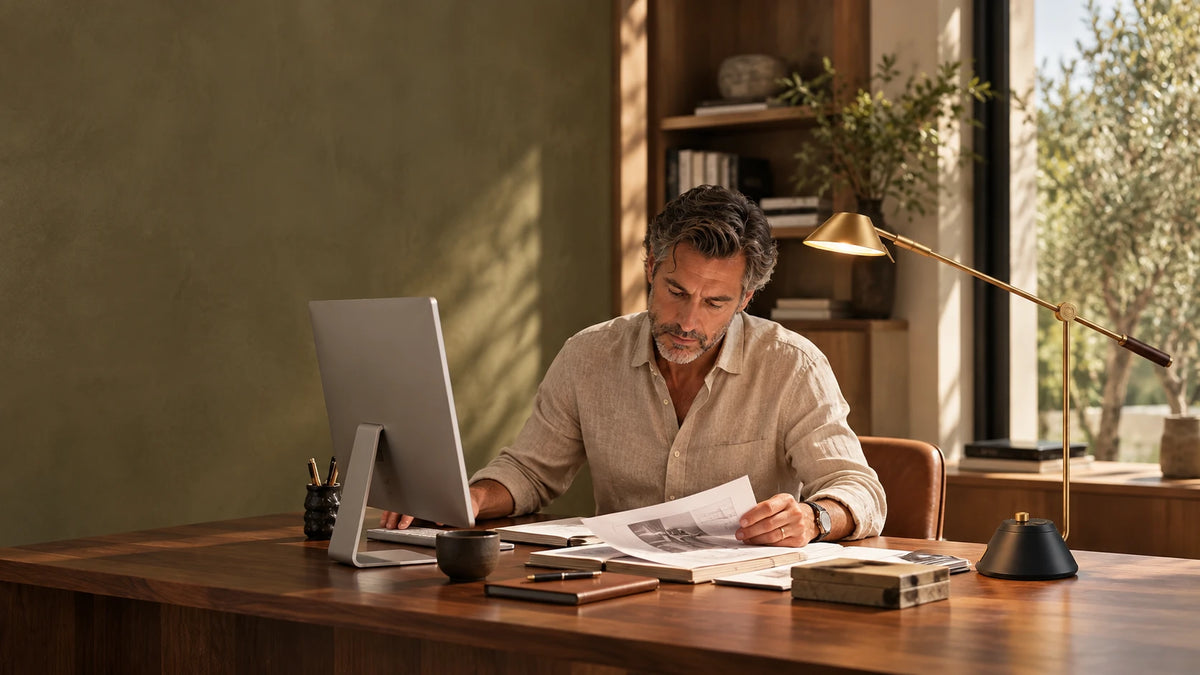
SOLA Desk adapts to your task, measured workspace light, and daily routine.
Why the whole day matters
A desk reading tells you about the work surface. The light reaching your eyes also depends on the spectrum, level, position, and timing of the surrounding light.
A room through the day

Daytime · SOLA Desk
Screens, reading, writing, and fine detail. Position the light by hand.
Explore SOLA DeskBest forA personal desk where your task and available daylight change.

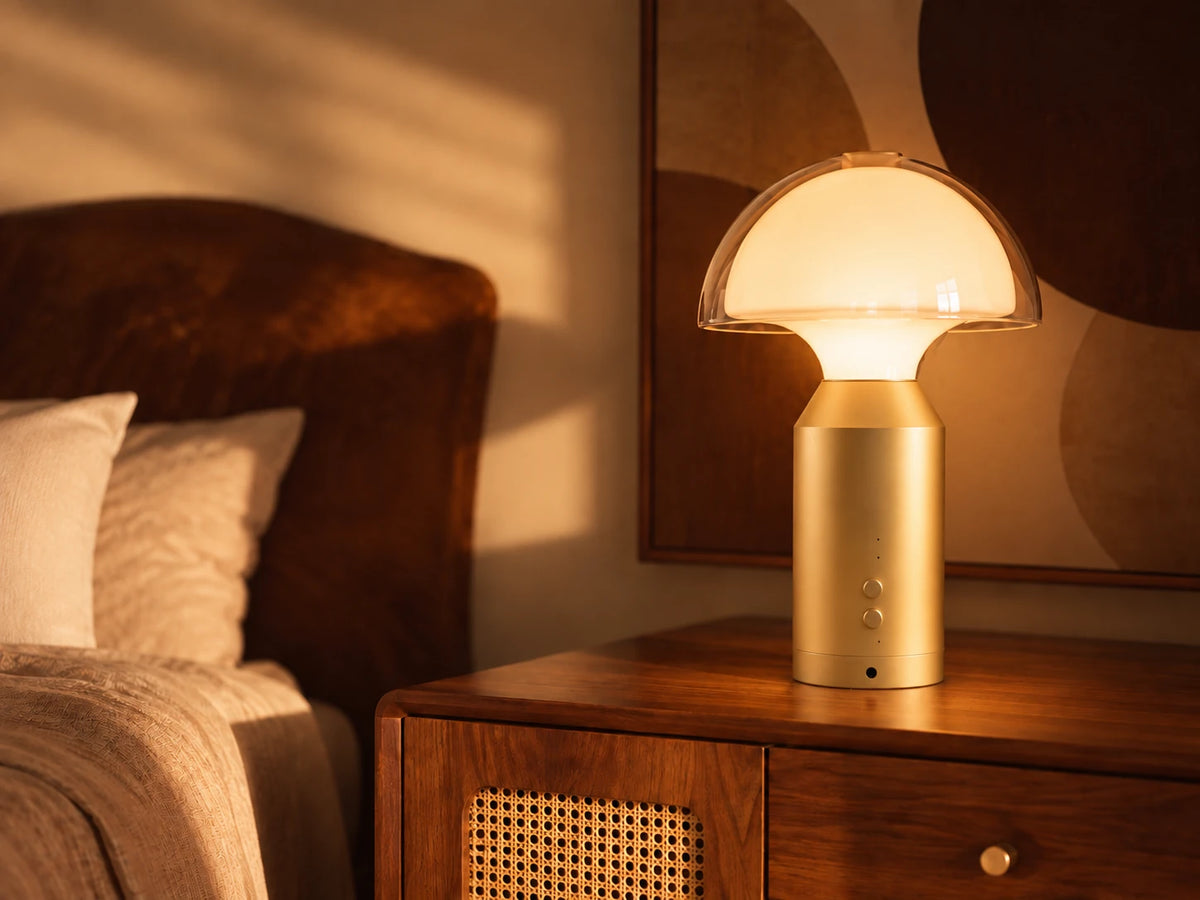
Evening · SOLA Halo Plus
A side table, a conversation, the pause before bed. Place the light where life happens; use a separate task light when you need sustained reading or whole-desk illumination.
Explore Halo PlusBest forBroad console · Generous side table · Larger bedside
Start with the place you use most
Start with your desk, a small bedside or a more generous corner. You do not need the whole collection to begin.
For a fixed desk
A movable light sensor reads at your task position. Select your task and position the arm by hand.
Screen work · Reading · Fine detail
Explore SOLA Desk ↗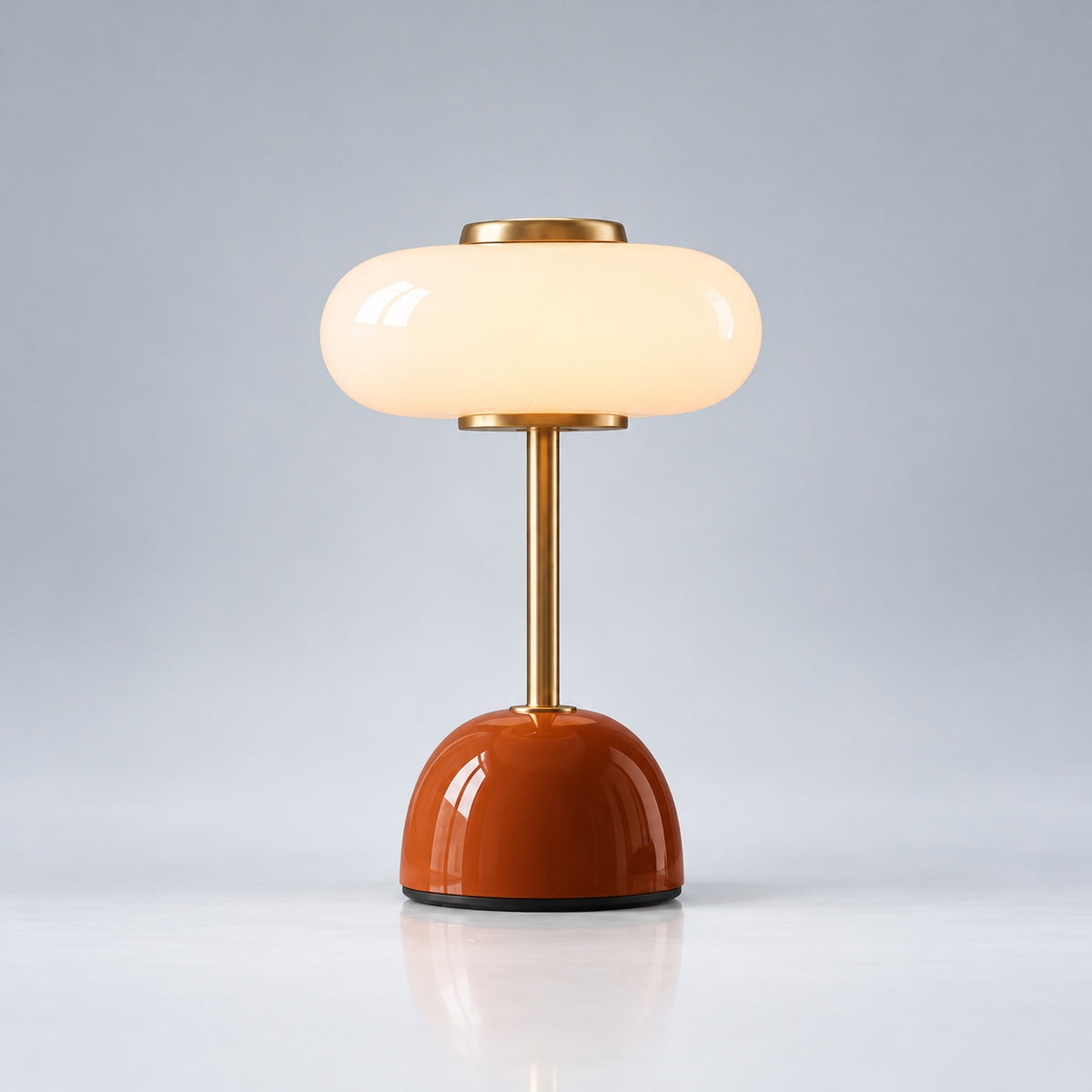
For a small bedside
Compact local light, with morning and night modes and radar presence-triggered on/off.
Ø200 × H279 mm · Light only
Explore SOLA Halo ↗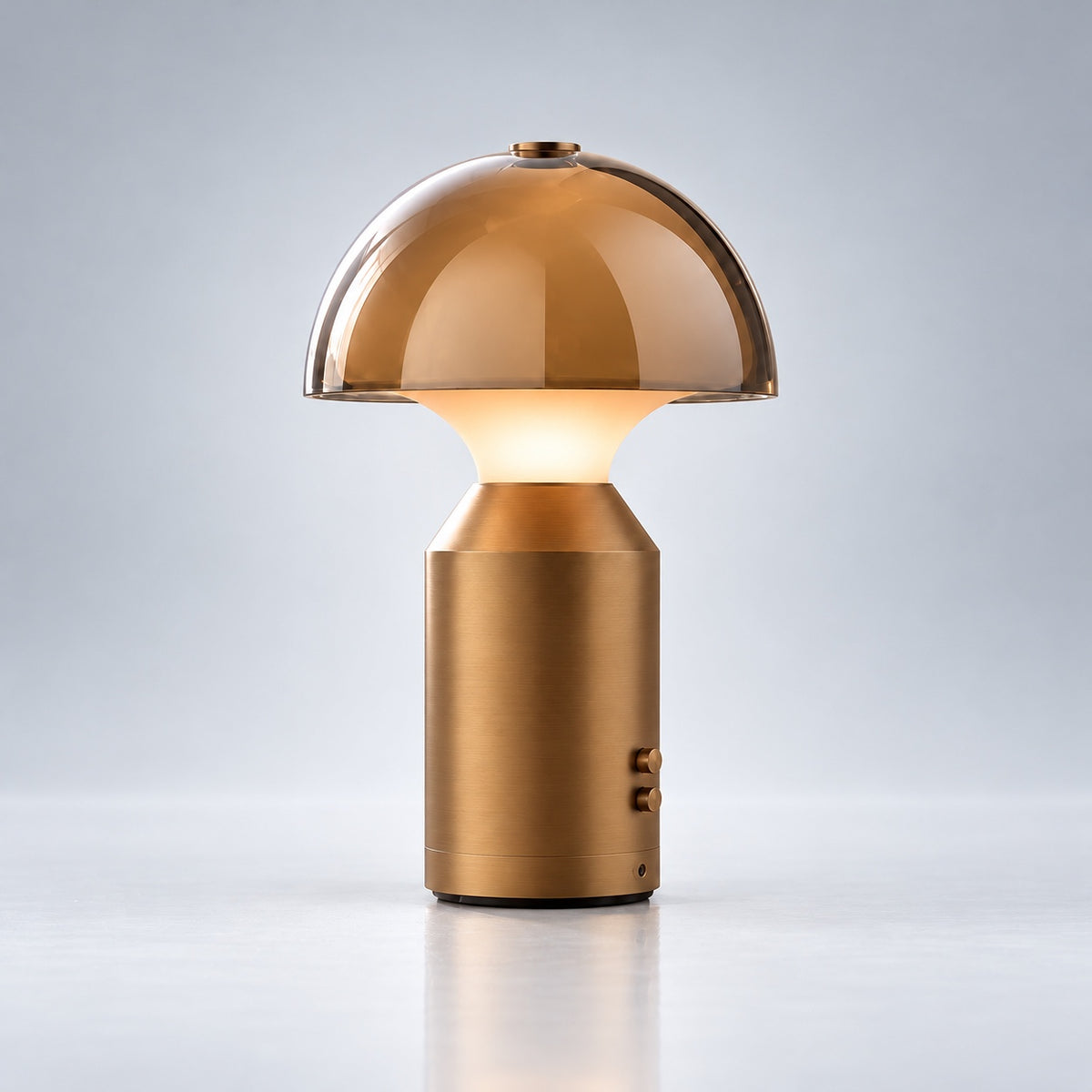
For a larger side table
A larger brass-and-glass presence for a sideboard, reading corner or generous bedside.
Ø305 × H480 mm · 60 GHz radar
Explore SOLA Halo Plus ↗At home with light
Begin with classic brass. Explore how material and color can sit alongside the things you already live with.

Brass and transparent glass, alongside pale wood.
Current featured finish. Check availability for your region.
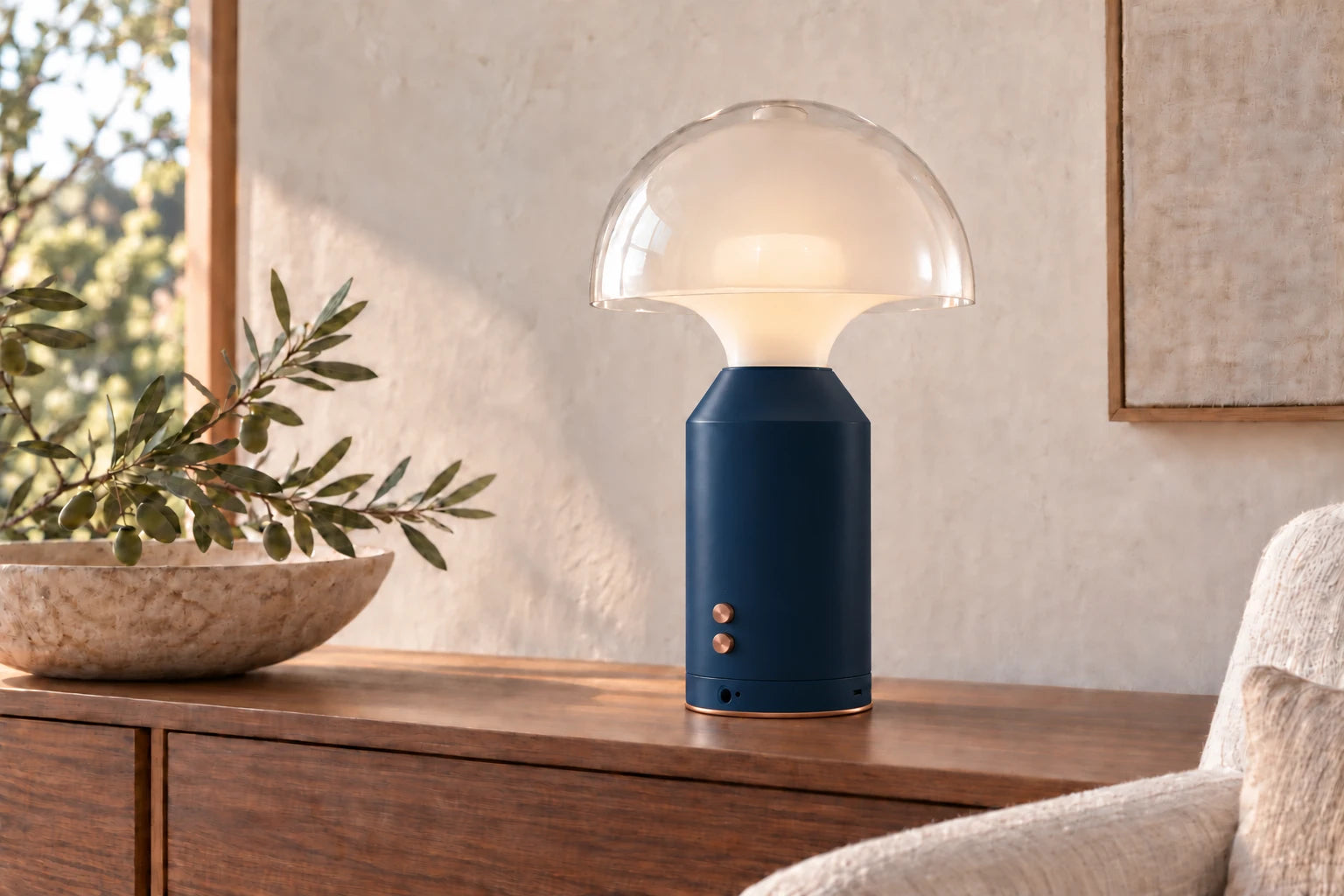
A deep navy base beside warm wood and pale linen. Clear glass catches the light from the window.
Design concept
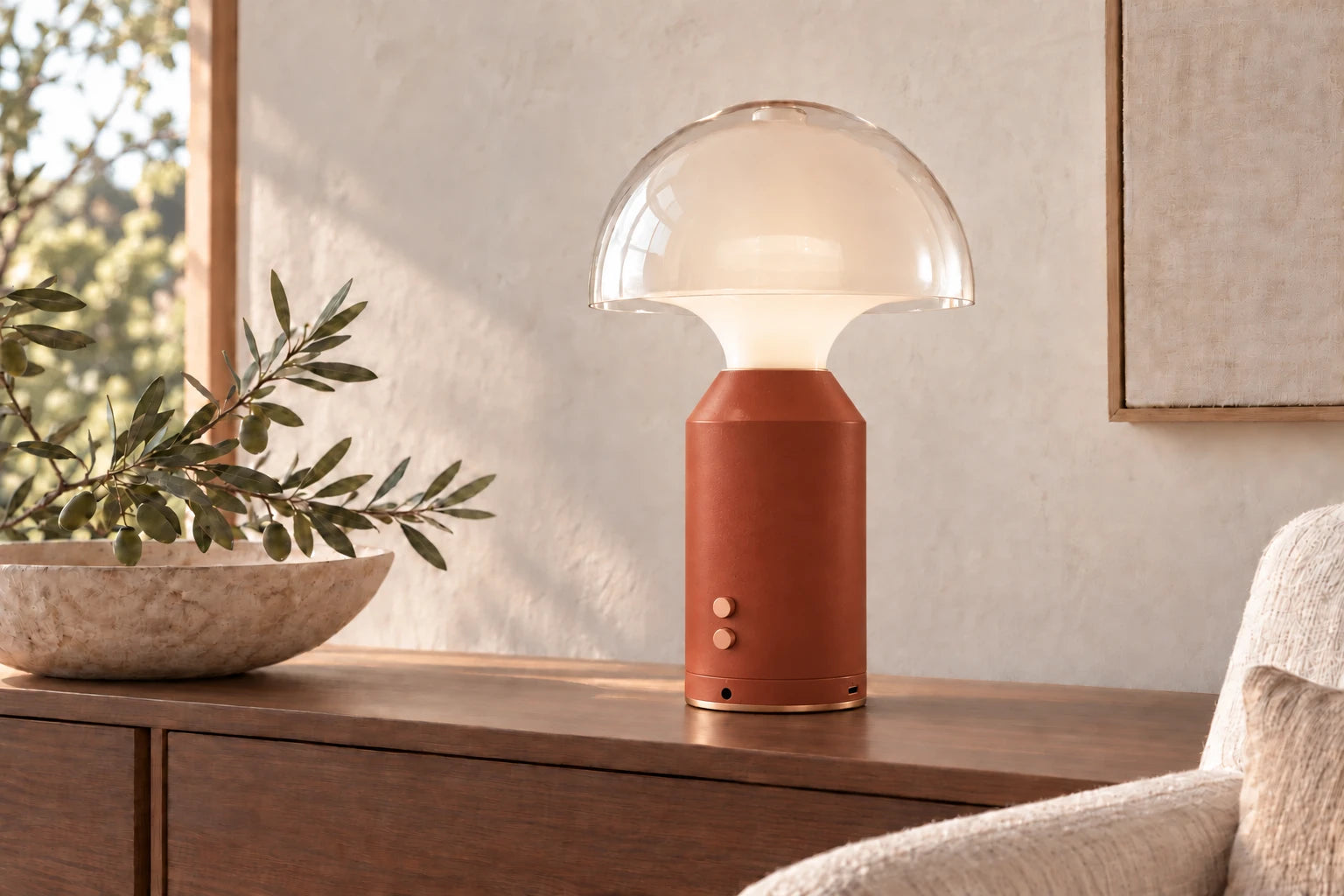
Matte terracotta beside dark wood and soft textiles. A warm accent for the sideboard you use every day.
Design concept
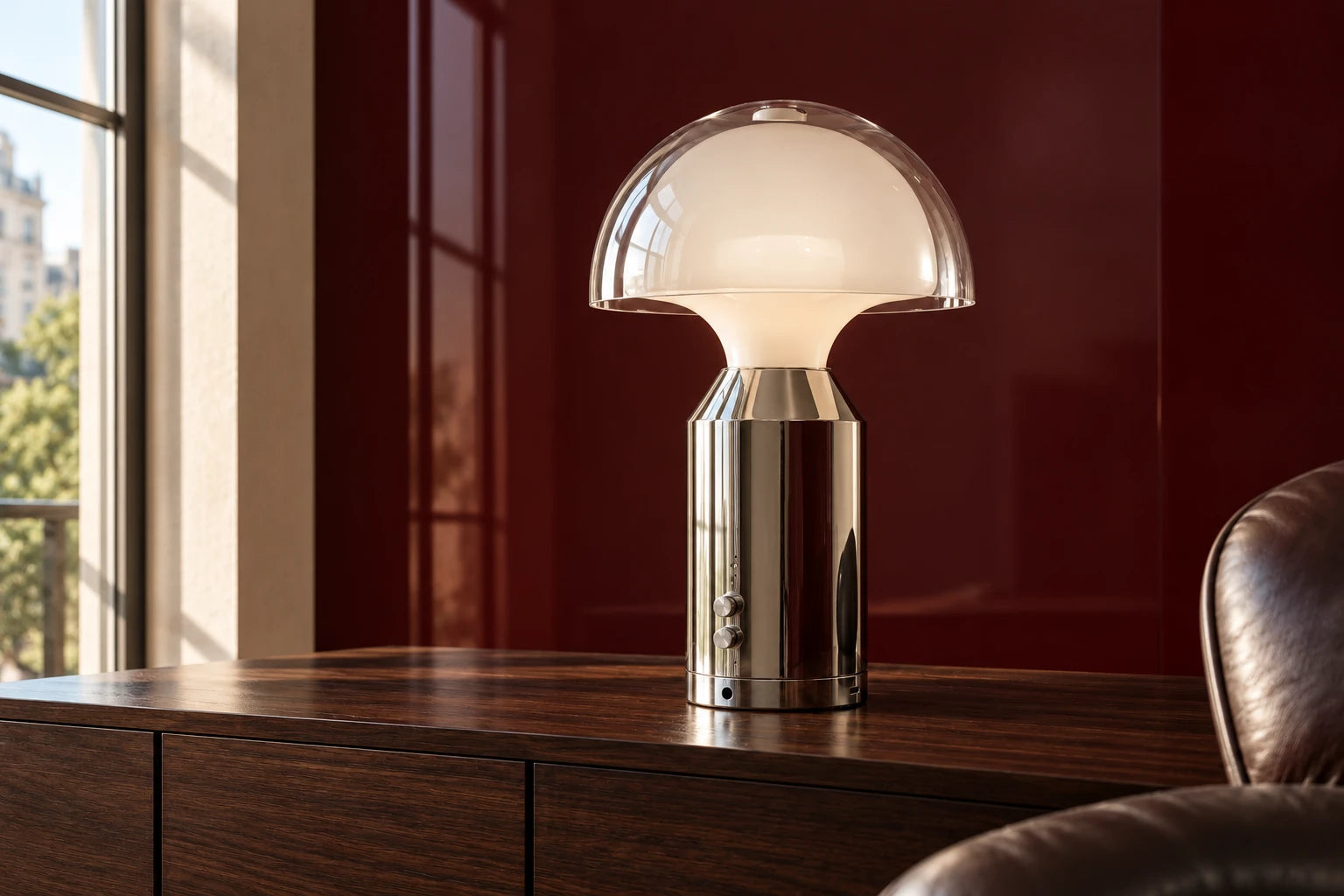
A mirrored base reflects window light and dark wood, framed by a burgundy wall.
Design concept

Dark matte surfaces, with room for light and shadow.
Design concept
Light, with its evidence
Explore three measured light states from the published SOLA sample reports. The readings describe the sample, not your personal exposure or a sleep outcome.
07:30 · Measured sample
Lumens describe total light output, not illuminance on your desk.
13:30 · Measured sample
Lumens describe total light output, not illuminance on your desk.
20:00 · Measured sample
Lumens describe total light output, not illuminance on your desk.
| State | Reported K | Ra | Flux (lm) | Note |
|---|---|---|---|---|
| 06:00 | 1782 | 85.2 | 223.38 | Measured sample |
| 06:15 | 1000 | 44.9 | 49.105 | Red-light sample; not an accurate white-light CCT. |
| 06:30 | 1000 | 44.9 | 33.225 | Red-light sample; not an accurate white-light CCT. |
| 07:00 | 2055 | 86.0 | 94.439 | Measured sample |
| 07:30 | 3027 | 94.9 | 345.68 | Measured sample |
| 08:00 | 3493 | 92.6 | 503.14 | Measured sample |
| 08:30 | 4005 | 93.2 | 683.5 | Measured sample |
| 09:00 | 4602 | 94.6 | 917.17 | Measured sample |
| 09:30 | 4752 | 96.0 | 1122.7 | Measured sample |
| 10:00 | 6216 | 98.9 | 986.95 | Measured sample |
| 12:00 | 4654 | 95.0 | 1227.7 | Filed as 12:00; report model field says 0:00. |
| 13:30 | 6233 | 98.9 | 986.48 | Measured sample |
| 14:30 | 5010 | 96.2 | 1227.1 | Measured sample |
| 16:00 | 5203 | 96.6 | 1080.9 | Measured sample |
| 17:00 | 3978 | 95.2 | 840.73 | Measured sample |
| 20:00 | 2093 | 90.0 | 205.82 | Measured sample |
| 21:00 | 1000 | 45.1 | 35.855 | Red-light sample; not an accurate white-light CCT. |
| 21:30 | 1000 | 45.0 | 48.982 | Red-light sample; not an accurate white-light CCT. |
| 22:00 | 1000 | 45.0 | 66.28 | Red-light sample; not an accurate white-light CCT. |
| 23:59:59 | 1000 | 45.0 | 66.342 | Red-light sample; not an accurate white-light CCT. |
Time labels follow the source filenames. These reports show discrete light states, not a continuous all-day device log. The vector charts show the CN site’s digitized report curves over 400–780 nm, with each peak normalized to 1. They are not raw instrument exports and do not compare total brightness or health effects. The source archive associates these reports with the SOLA lighting project; they are not a separate production validation of every model.
From the page to the notes beside it.
Even light across a 70 × 50 cm work area.1

523 lx
Work mode · Light-emitting surface 1 m above test plane · One ESL sample · Internal test
Report LAB2026082102, completed August 26, 2026. One sample in work mode, with the light-emitting surface 1 m above the test plane. The report specifies a 700 × 500 mm outer area and a 500 × 300 mm central area. This display shows the 45 points in the outer area; it does not extend the measured coverage to a larger desk.
The edge point at x 70 cm, y 20 cm reads 523 lx, the lowest value in this test. The center at x 35 cm, y 25 cm reads 670 lx, the highest. The report defines uniformity as maximum ÷ minimum: 670 ÷ 523 ≈ 1.28; values closer to 1 indicate more similar readings. Conversely, 523 ÷ 670 ≈ 78% means this edge point receives approximately 78% of the center illuminance. This is not a performance score, perceived brightness percentage or improvement over another lamp. It is also different from minimum ÷ average uniformity (U₀).
The desk image is a generated scene illustration. The 45 selectable points follow the relative positions in the original report; the dotted lines are coordinate guides. The nominal 70 × 50 cm area does not mean the book, hands or every surface in the photograph was measured. The report contains no continuous surface data. No illuminance is interpolated between points.
The original report is filed under an ESL sample, with the project name “Human-centric desk lamp” and a blank model field. It is presented here in association with the supplied SOLA Desk product materials. Desk size, lamp position, mode and ambient light affect the distribution. These readings are separate from the 40 cm test on the product page.
Download all 45 measurements ↗Engineering & atmosphere
The wider group brings 26 years of professional lighting and optics experience. Harlowe’s professional imaging-light work informs how we think about materials, color, and the task in front of a person.
Published tests describe the light they measured. Room imagery expresses a use; it does not stand in for a performance test.
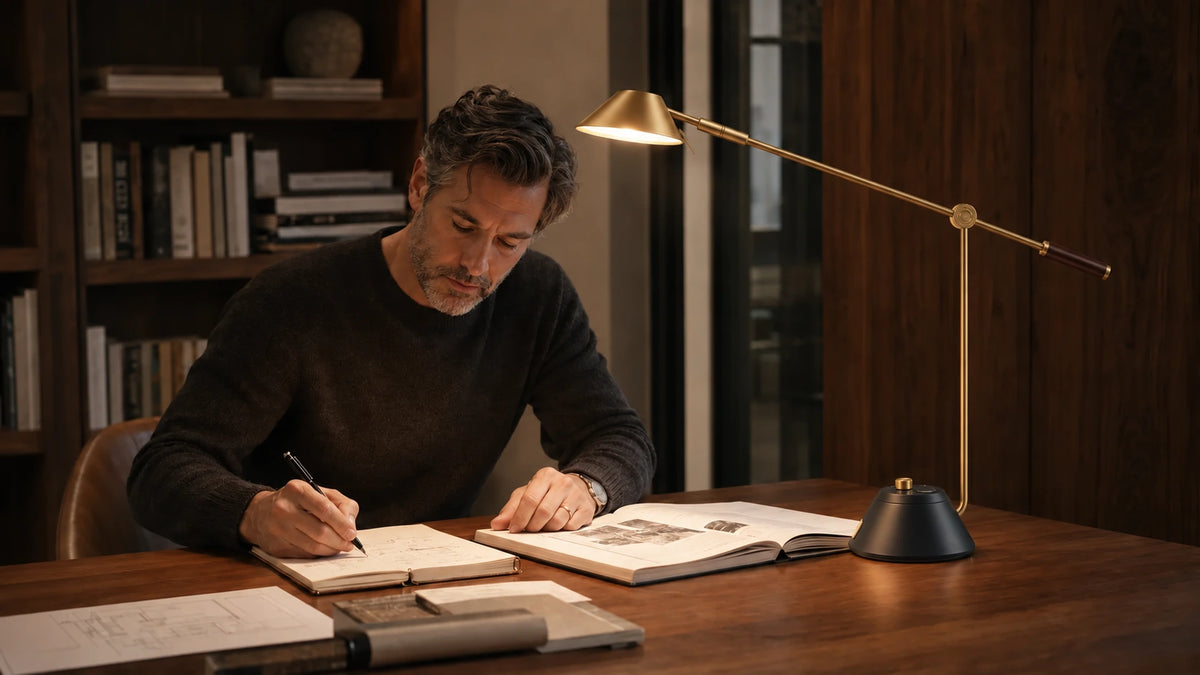
The collection
Light for the work. An ambient presence for the room. Sound and scent when you choose them.
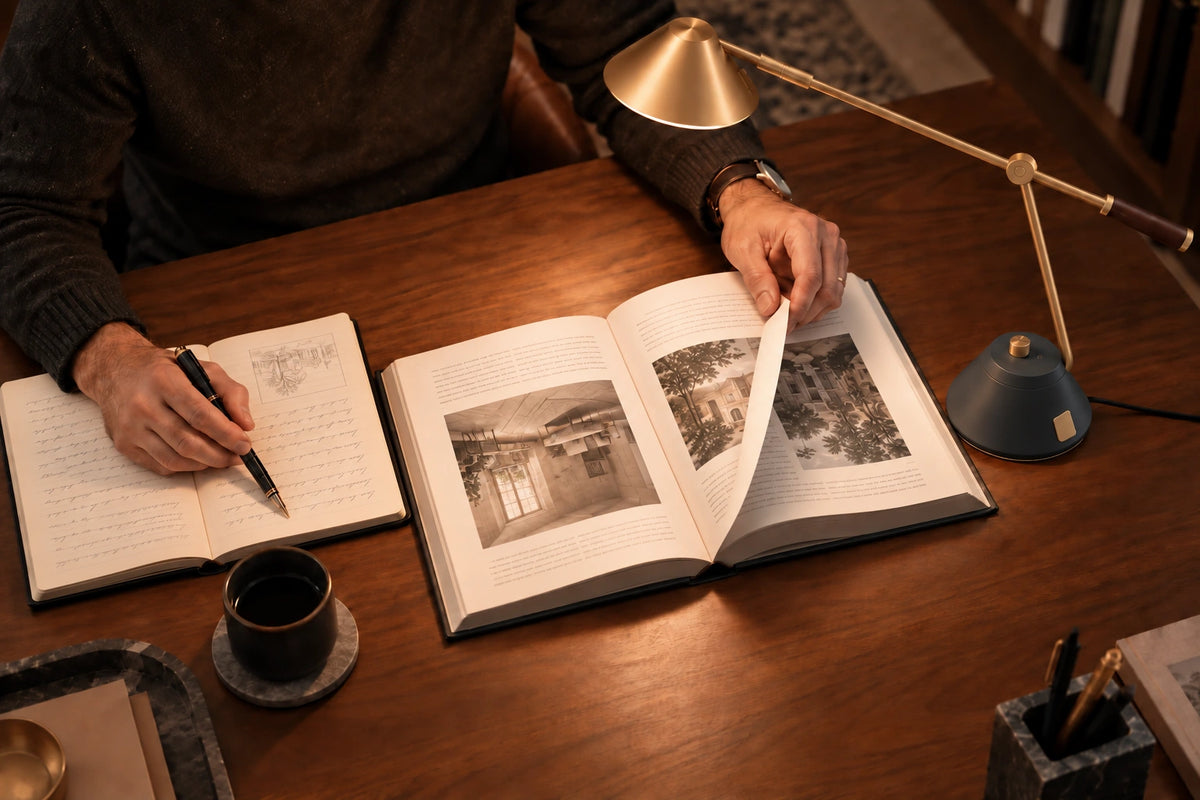
Daytime · SOLA Desk
An adaptive desk lamp with a movable light sensor at your chosen work position. Selected task, measured work-surface light, and time of day guide its response—for screens, pages, and fine detail.
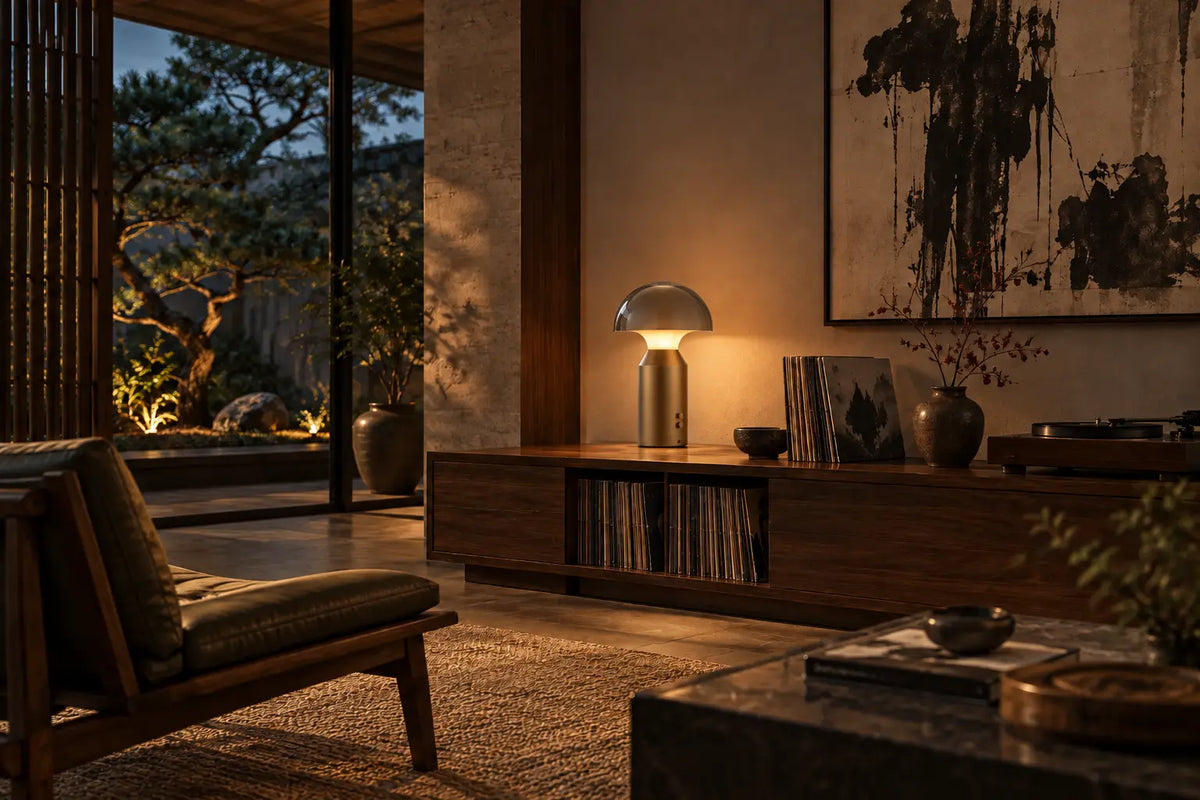
Evening & night · SOLA Halo Plus
Halo offers compact local atmosphere. Halo Plus adds scale and 60 GHz sensing. Halo Sound adds optional audio and a separate delivery plan.

The collection
Waterless scent. One oil path, or two kept separate. Devices only. Compatible oils sourced separately.
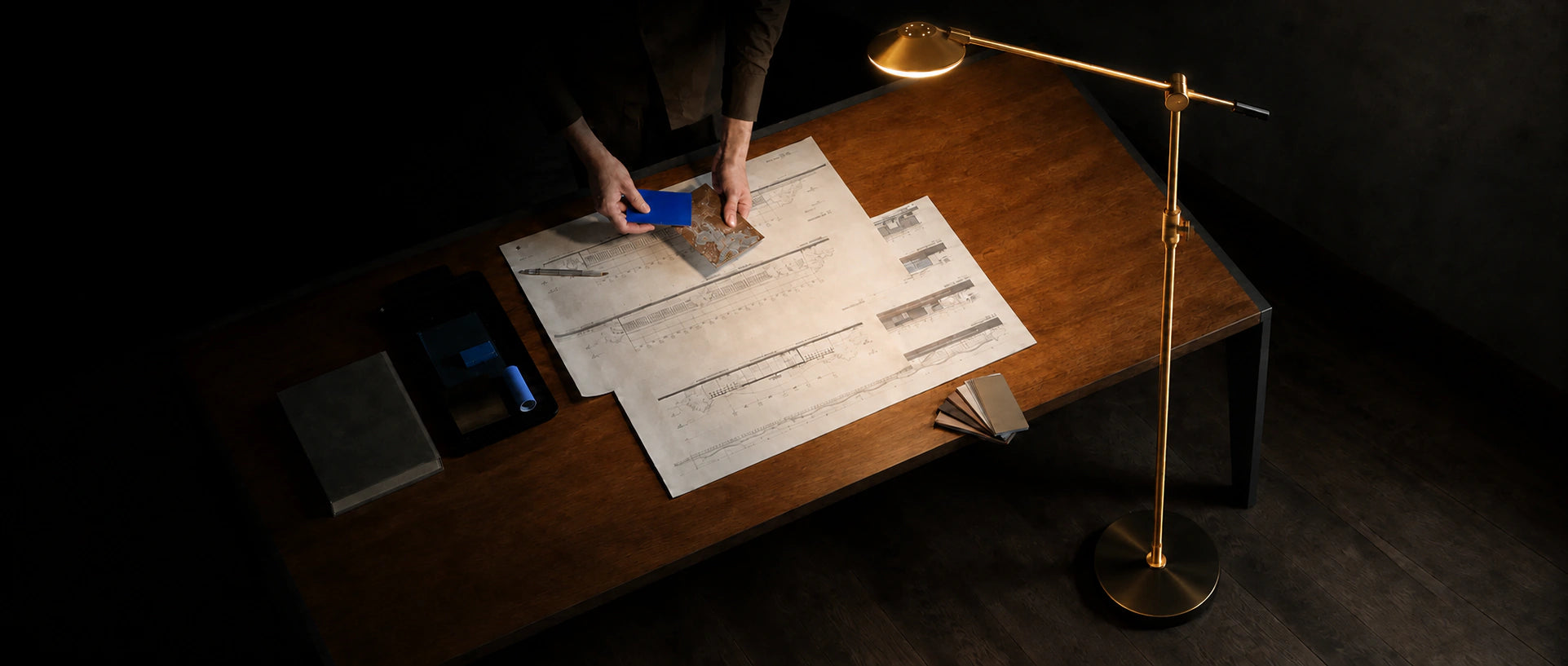
The collection
Direct SOLA Floor toward the page. Choose Halo Sound for ambient light, 40+ built-in sounds or your phone music as the evening changes.
Art & living culture
Music, craft and the spaces we share inform the way we think about everyday objects.

Music & scent
A creative collaboration with pianist Kong Xiangdong, exploring rhythm, emotion and the pauses between notes through scent.
Brand collaboration; scent products are not offered in this US launch.
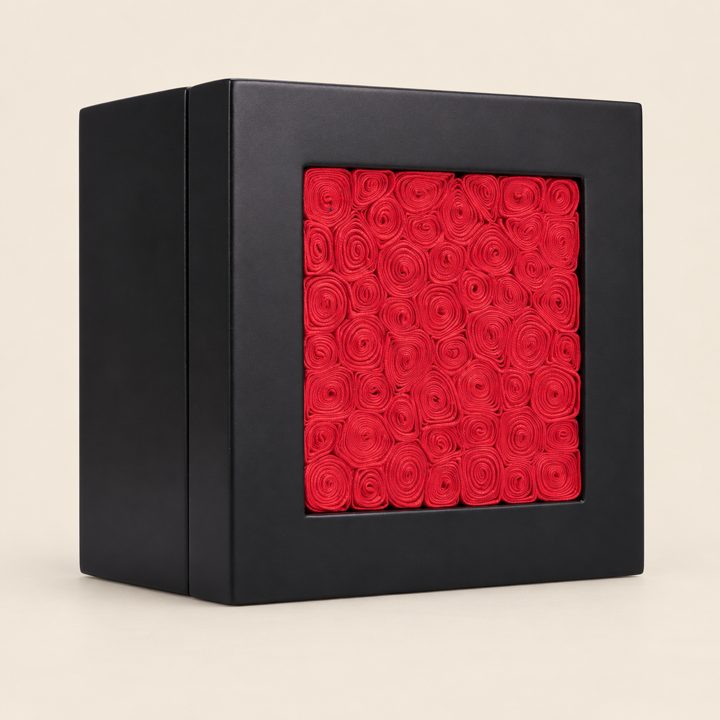
Tea, scent & lacquer
Ancient tea, hand-worked lacquer and forest-inspired scent brought into objects for daily use and gifting.
Craft project; not offered for US purchase here.
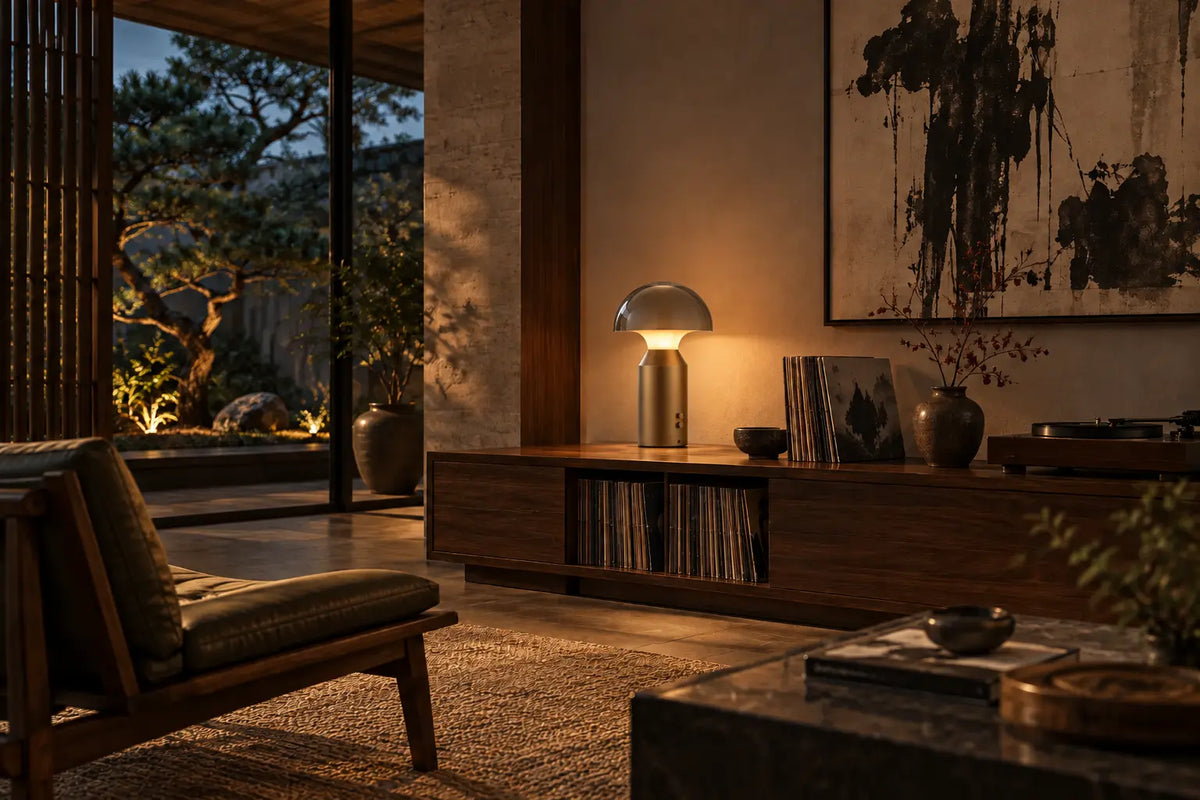
Art & living spaces
Light, music and imagery considered in the places where people spend their days.
Illustrative creative direction, not a product performance demonstration.
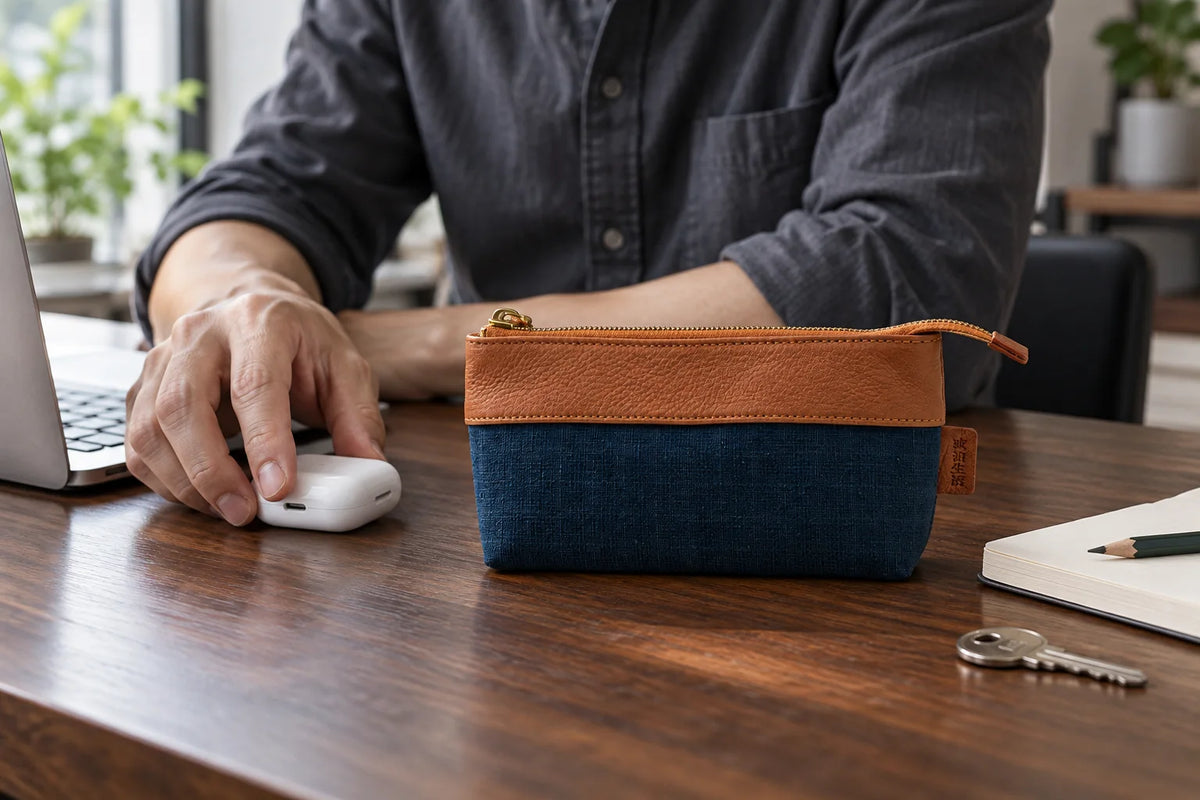
Chongming cloth & leather
A weaving tradition from Chongming, Shanghai, considered alongside leather, brass zippers and hand stitching.
Design and lifestyle imagery; availability is separate from the US lighting launch.
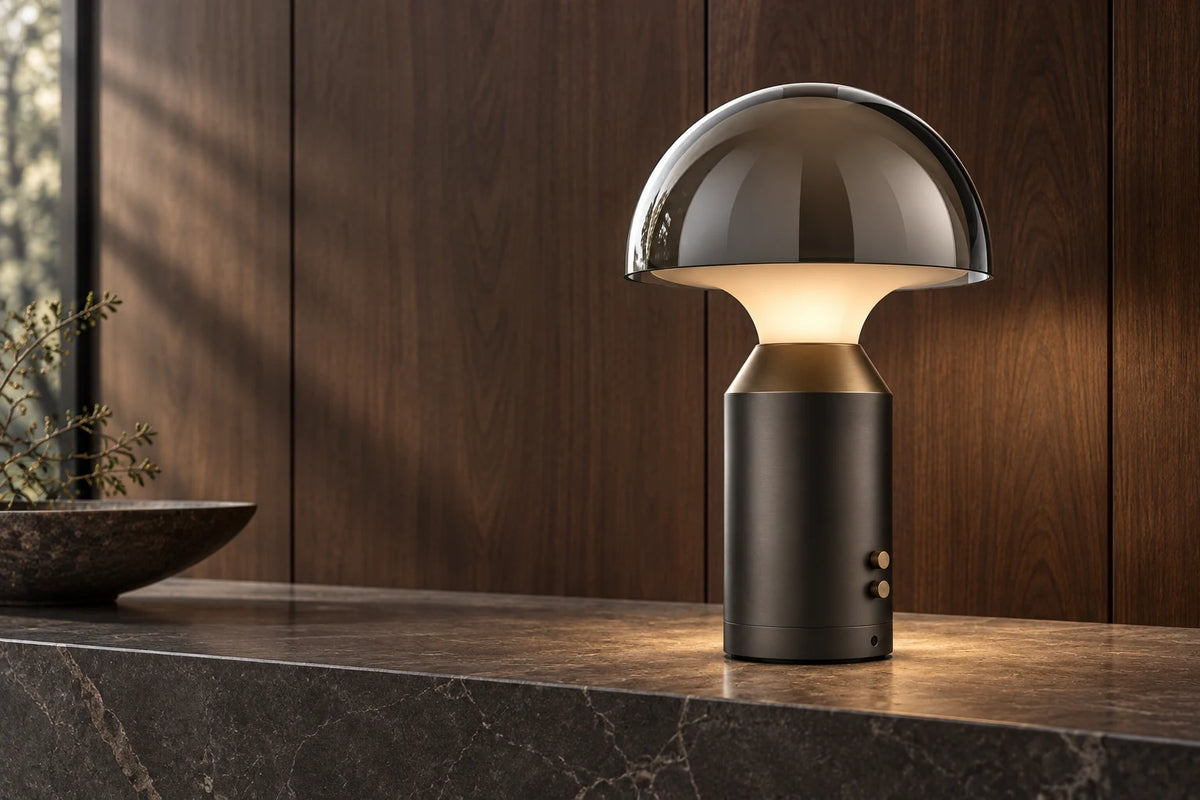
Residential design
Material, form and the changing light of a day explored with designers and residential projects.
A collaboration concept, not an announced co-branded collection.
Clear answers
Email updates only. No payment or stock reservation. Final terms before purchase.
Get updates for your regionHalo’s morning mode includes 480 nm cyan light, designed as a distinct morning-light option near where you sit. Biological responses depend on the light reaching the eyes, intensity, duration, timing, and the individual. A wavelength specification alone does not establish instant melatonin suppression or a measured personal light dose.
The Halo family has a 480 nm cyan morning mode and a 1000 K night mode with blue- and green-light filtering. The night mode is designed for gentle light during nighttime trips. These are different light modes for different moments; no instant melatonin response or guaranteed return to sleep is established for this product.
Precision radar presence sensing enables automatic on/off in response to the user, without reaching for a switch. Halo Plus uses 60 GHz microwave radar. Detection range, placement and setup guidance follow the model’s installation instructions; the 60 GHz specification is not assigned to other models here.
All Harlowelife US products carry a 5-year limited warranty and 30-day returns. Coverage, exclusions, return eligibility, claim steps, and shipping responsibilities are specified in the final purchasing terms. Launch registration does not begin a warranty or return period.
Halo is the compact ambient-light choice for a small bedside, side table, or personal reading corner. Halo Plus has a larger 305 mm dome and 480 mm height, with 60 GHz microwave radar for fine presence sensing. Consider larger furniture and check clearance; a wider illuminated area or suitability for shared public spaces requires distribution testing. Halo Sound adds optional audio for the bedside and has a separate preorder plan. Halo and Halo Plus are light-only models. Halo measures 200 mm maximum diameter × 279 mm height (7.9 × 11.0 in). Halo Plus measures 305 mm maximum diameter × 480 mm height (12.0 × 18.9 in). These are nominal dimensions confirmed by the brand; room images are not a true-scale comparison. Halo Plus base footprint remains to be confirmed.
Halo Plus uses 60 GHz microwave radar for fine presence sensing at the bedside. It supports presence-triggered automatic on/off without reaching for a switch. Follow model-specific detection range and installation guidance. This specification does not establish sleep-stage, breathing, heart-rate, or medical monitoring. Halo Sound’s radar specification is not confirmed here.
The Halo family offers 480 nm cyan morning light and a 1000 K night mode with blue- and green-light filtering, plus radar presence-triggered automatic on/off. Timer, app and offline setup instructions are model-specific; this is not a promised automatic whole-home system.
Reading and detailed work need useful task light. The light reaching the eyes also depends on the room, spectrum, level, position, and timing. Healthy-adult research considers daytime, evening, and nighttime exposure separately. The collection applies that day-to-night design principle; it does not establish a clinical outcome or personal eye-level exposure.
Start with SOLA Desk for screen work, reading, writing, and a fixed personal workspace. Choose Halo for compact local atmosphere. Choose Halo Plus for a larger physical presence and 60 GHz radar, or Halo Sound for bedside light with optional audio. VELA 1 and VELA 2 are scent devices, not lamps.
Sales of SOLA Desk, Halo, Halo Plus, VELA 1, and VELA 2 are planned to open on October 30, 2026. Halo Sound preorders are planned to open on October 30, 2026, with delivery planned for January 10, 2027. The sales-opening date is not a delivery promise for the other models.
You will receive updates about your selected product and region. Signing up does not place an order, reserve stock or guarantee a launch date.
US listed prices: SOLA Desk $599; SOLA Floor $899; Halo $399; Halo Plus $799; Halo Sound $999; VELA 1 $159; VELA 2 $199. SOLA Floor’s US launch timing is forthcoming; it is not part of the October 30 sales opening. Tax, shipping, delivery and final purchasing terms are shown before payment. All models have a 5-year limited warranty and 30-day returns, subject to the published terms.
You select the task and position the arm yourself. SOLA Desk uses the selected task, time, and measured work-surface light to guide its light response. The movable light sensor measures at the task position; it is not an eye-level spectral sensor.
Each product has its own role. This collection does not promise automatic cross-room coordination, shared sensing, or a complete whole-home lighting installation.
No Harlowelife essential oils are offered in this US launch. VELA 1 and VELA 2 are sold as devices; compatible oils are sourced separately. Confirm formula, bottle, and nozzle compatibility before use.
We have not established improvements to sleep scores, HRV, or deep sleep for these products. General lighting research informs the direction; optical measurements do not demonstrate clinical outcomes. No integration or affiliation with Oura or Eight Sleep is claimed.
Select your country or region to hear about local availability. Product selection, pricing and delivery dates vary by market.
Sales of SOLA Desk, Halo, Halo Plus, VELA 1, and VELA 2 are planned to open on October 30, 2026.
Halo Sound preorders: October 30, 2026. Planned delivery: January 10, 2027.
SOLA Floor · US preview. Launch timing forthcoming.
US purchasing terms: 5-year limited warranty · 30-day returns. Sales opening is not a promised delivery date.
US policy details →